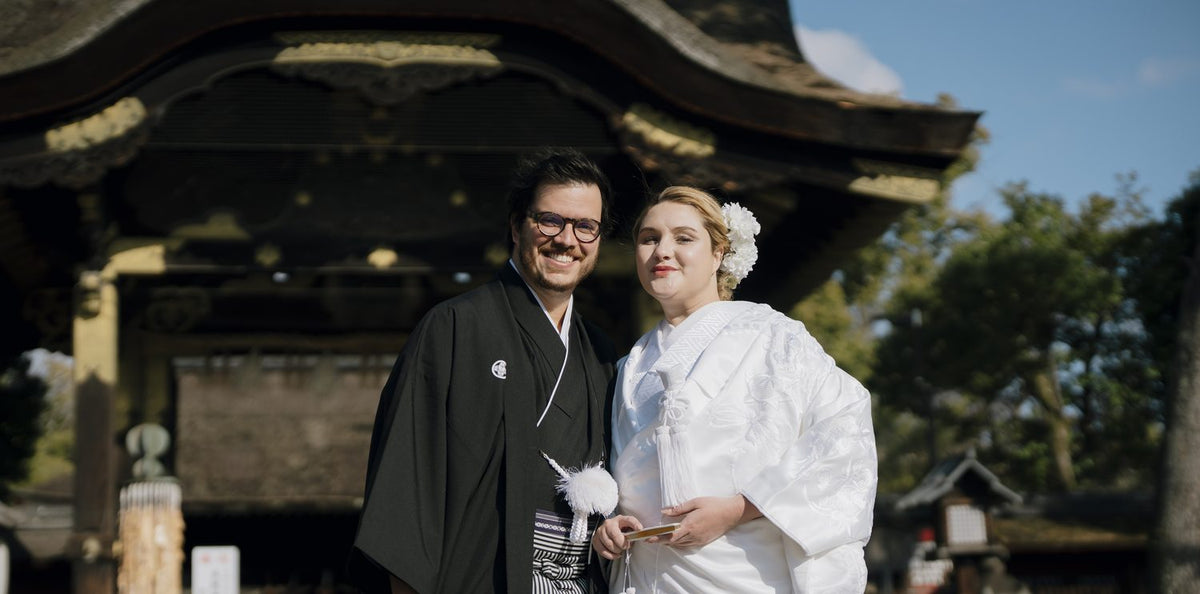
Real Wedding Story
01


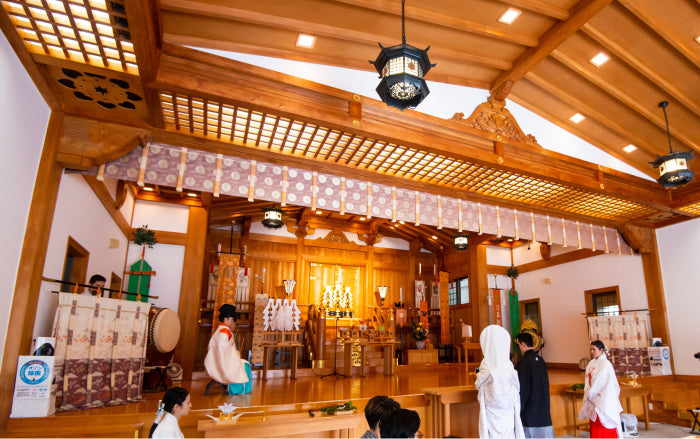
In short: Choose a shrine for the experience it can provide, not for name recognition alone. The two priorities that matter most are a setting beautiful enough for the photographs you will keep and a quiet, private atmosphere away from heavy crowds. From there, confirm language support, guest limits, access, and ceremony rules.
Search results for Japanese shrines tend to surface the same handful of famous names, ranked by popularity rather than by fit. That approach works reasonably well for sightseeing, but a wedding is not a sightseeing stop. This guide sets out how to actually choose a shrine for your ceremony, using the same reasoning WAKON STYLE's wedding producer applies when narrowing options for couples, rather than a simple list of well-known locations.
Most existing guides for this question tend toward two extremes: a list of the most photogenic or historically significant shrines in the country, or a generic checklist of logistics with no real sense of how to weigh one factor against another. Neither approach reflects how the decision is actually made in practice, which is why this guide is built around the two-factor method described below, rather than a ranked list of locations.
Start with the atmosphere you want to remember: visual beauty for your photographs and enough privacy to experience the ceremony without feeling surrounded by crowds. After that, confirm whether the shrine's practical conditions fit your date, guests, language needs, and planned photography.
Rather than starting from a ranked list of famous shrines, it helps to weigh two things when narrowing options: whether the shrine itself is visually striking enough to carry the photographs a couple will keep for years, and whether the ceremony can be held quietly and privately, away from crowds. A well-known name can be part of what draws you to a location, but it is worth treating that as one input among several rather than the deciding factor. This is the same approach WAKON STYLE's wedding producer, Etsuko Inoue, applies directly with the couples she works with. The practical order that tends to work best is to decide what experience you actually want first, and only then check whether specific shrines can deliver it.
A famous name does not automatically create the best wedding experience. A visually meaningful setting supports the photographs you will take home, while a quieter environment can help the ceremony feel personal and focused.

This is a personal judgment rather than a fixed standard: some couples are drawn to dramatic seasonal scenery, others to a particular style of architecture, and others to a quieter, more understated setting that simply feels right for them. The relevant question is less "is this shrine famous" and more "will these surroundings still mean something to us when we look back at the photographs in years to come."
Privacy in this context does not necessarily mean the entire shrine is reserved exclusively for your ceremony. It refers more to how busy the grounds tend to feel, how much foot traffic passes near the ceremony space, and whether the ritual can proceed without a constant flow of unrelated visitors nearby. This is worth asking about directly for your specific date and time, rather than assuming every shrine offers the same level of quiet.
The two priorities may need to be balanced depending on the available venues, so it helps to talk through, as a couple, which of the two matters more if you have to choose. WAKON STYLE applies the same balancing act on your behalf: from the many shrines it has worked with, the team narrows the field to around two options that meet both conditions reasonably well, and the couple makes the final decision between them. Couples guided through this process by WAKON STYLE's wedding producer, Etsuko Inoue, describe telling her afterward, again and again, that they were glad it was that particular shrine, whether or not the name was widely known beforehand.
Compare regions by the complete wedding-day experience rather than assuming one city is always better. Consider where you will stay, how guests will travel, the atmosphere you want, and whether suitable shrine options and support are available for your preferred date.

| Comparison point | Question to ask |
|---|---|
| Travel base | Will the couple and guests already be staying nearby? |
| Access | Can guests reach the shrine comfortably? |
| Atmosphere | Does the area match the experience and photographs you want? |
| Privacy | How busy are the grounds likely to feel around the ceremony? |
| Support | Can the required booking, interpretation, attire, and coordination be arranged? |
| Schedule | Is the shrine available on the preferred date? |
WAKON STYLE currently supports weddings across twelve areas nationwide, including Sendai, Saitama, Tokyo, Yokohama, Nagoya, Kyoto, Osaka, Nara, Hyogo, Hiroshima, Fukuoka, and Kumamoto, which gives couples a genuinely wide set of starting points rather than a single default city. That range is worth treating as a set of options to weigh against your own travel plans and the atmosphere you are looking for, rather than as evidence that any one area is objectively superior to another. Current shrine options within each area are confirmed directly with your coordinator rather than ranked on this page.
If you are already planning to spend most of your trip in one region, for sightseeing or to visit family, it is often more practical to look closely at shrines within that area first, rather than treating the whole country as an open field of equally likely options. Working outward from a travel base you have already decided on tends to produce a shorter, more realistic list than starting from a nationwide search.
Confirm booking availability, guest capacity, ceremony language, photography rules, and rain procedures before making a final choice. These details vary by shrine, so a beautiful location should not be treated as confirmed until the practical conditions are checked.
Guest capacity limits differ from shrine to shrine, so if you are planning to bring family or friends, this is one of the first practical details worth confirming, alongside any specific considerations for children or guests who need extra mobility support.
The wedding vow is read in Japanese as standard, with romanized support and day-of rehearsal provided through WAKON STYLE, a process covered in full in a companion guide on what actually happens at a Shinto wedding. For a broader overview of the ceremony itself, WAKON STYLE's Shinto wedding overview is also a useful starting point. Whether a rehearsal is possible at the shrine itself ahead of the wedding day is one of the details that can vary and is worth confirming directly.
Some shrines restrict photography or filming during specific parts of the ceremony, so if capturing every moment matters to you, ask about this before booking rather than assuming it will be unrestricted. Ceremonies are generally held rain or shine.
Write down your non-negotiable priorities, remove options that do not meet the practical requirements, and compare the remaining shrines on beauty and privacy. WAKON STYLE can narrow suitable options to a small shortlist, after which the couple makes the final choice.
Before comparing specific locations, it helps to agree between yourselves on what matters most: the visual setting, a quiet atmosphere, a particular area, guest numbers, or your preferred date. Having this clear from the start makes every later comparison faster.
From there, remove any shrine that cannot meet your practical requirements: availability on your date, sufficient guest capacity, the language and rehearsal support you need, or acceptable photography rules. If you have a specific personal circumstance that a public page cannot answer, raise it directly with your coordinator rather than guessing from published information alone.
Rather than continuing to research an ever-expanding list of possibilities, it is more productive to compare a small number of shrines that already meet your non-negotiable conditions. This mirrors how WAKON STYLE works directly with couples: narrowing many candidates down to around two options that fit, so the final choice is a genuine comparison rather than an open-ended search.
A suitable shrine must meet both your experiential priorities and the practical conditions for your date and guests. These answers cover the checks that should be completed before confirming a venue.
Should we choose the most famous shrine? Not necessarily. Name recognition can matter to you, but beauty, privacy, and practical fit may have a greater effect on the wedding-day experience.
Do all shrines accept international couples? Policies and booking conditions vary by shrine, so acceptance and available support should be confirmed before making plans.
Can guests take photographs during the ceremony? Photography rules vary by shrine, and some locations restrict photography or video in certain areas.
How far in advance can we reserve a shrine? Some shrines accept reservations up to one year ahead, but booking windows and availability vary.
Can WAKON STYLE help us compare shrines? Yes. Shrine or temple selection and booking support are included in the Shinto Wedding Package, with suitable options narrowed for the couple to choose from.

Supervised by Etsuko Inoue, WAKON Wedding Producer
View Etsuko Inoue's full profileEtsuko Inoue has applied this shrine-selection approach — balancing photogenic beauty with a private atmosphere — since 2017. Her profile shares more about her background.
If you are comparing areas or need help narrowing the available shrines to options that match your priorities, contact WAKON STYLE to discuss your date, guests, and preferred atmosphere.
Contact UsReal Couples, Real Experiences
Explore more real Shinto and Buddhist wedding experiences in Japan.


