

Do You Have to Be Religious to Have a Shinto Wedding? What International Couples and Their Families Should Know
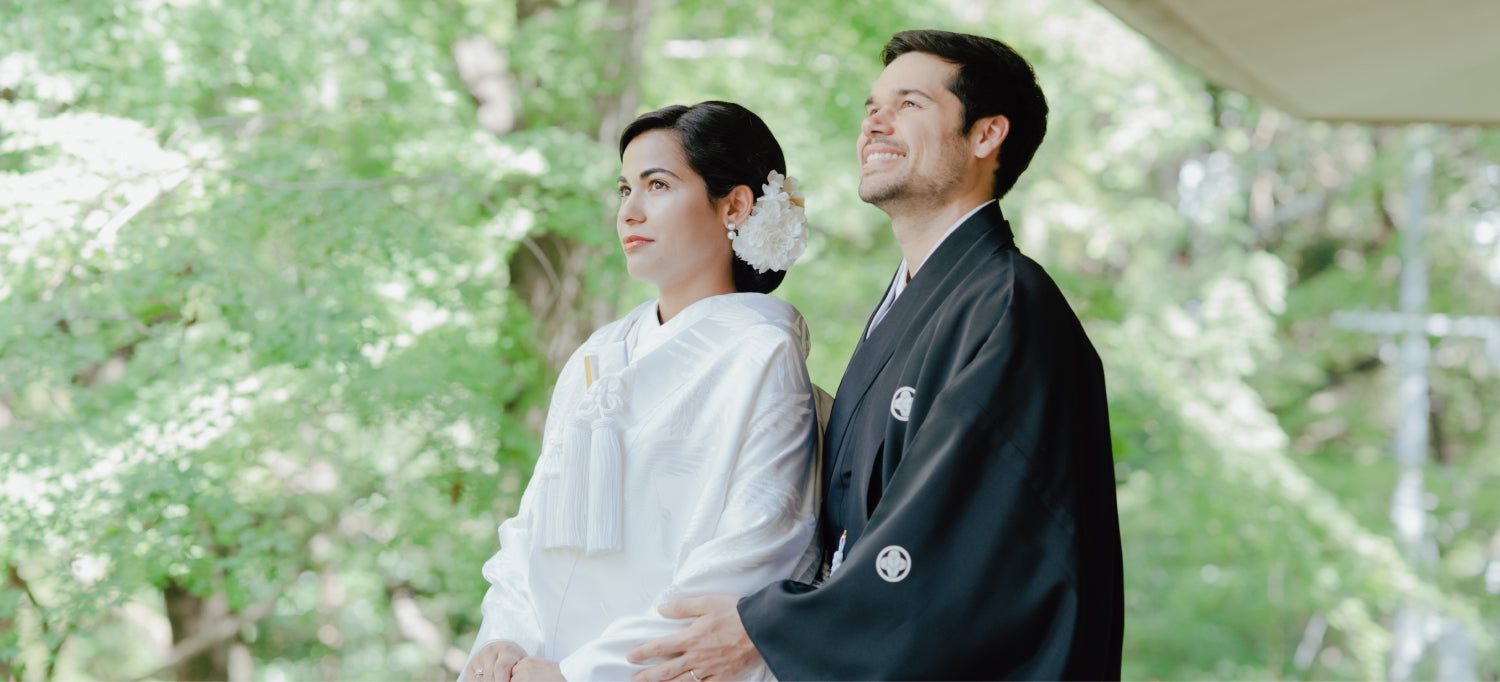
In short: You do not generally need to convert to Shinto or make a declaration of faith in order to have a Shinto wedding. The ceremony should still be approached as a sincere religious rite, and couples with specific faith-based concerns may wish to discuss them with their family, faith community, and wedding coordinator before booking.
Among the questions international couples raise before booking a Shinto wedding, one comes up more often than any other: will this conflict with our own faith, or with our family's? It is a fair question, and one that deserves a direct, honest answer rather than a reassurance that skips past it. This guide sets out what a Shinto wedding actually asks of the people taking part, so you and your family can make an informed decision rather than guessing.
Table of Contents
- Do you have to be religious to have a Shinto wedding?
- What does Shinto mean in the context of a wedding?
- Do you have to convert or give up your own faith?
- How can you explain a Shinto wedding to family members of another faith?
- How can international couples prepare respectfully?
- FAQ: Religion and Shinto weddings
- Who supervised this guide?
Do you have to be religious to have a Shinto wedding?
No formal conversion or declaration of Shinto faith is generally required for a Shinto wedding. Shinto does not center on one exclusive object of belief; it recognizes sacred presence throughout nature, which is why having a faith of your own is not, by itself, treated as an obstacle.
This is worth stating plainly, because the concern itself is a reasonable one. Couples often ask whether marrying in a Shinto ceremony means adopting a new religion, or setting aside their own. Shinto does not center on a single god in the way some other traditions do; instead, mountains, rivers, forests, and the sea are all held to be sacred, with the gods (kami) understood to dwell throughout nature itself. Framed this way, having a faith of your own is not treated as being in conflict with the ceremony. WAKON STYLE's wedding producer, Etsuko Inoue, notes that many of the couples she has welcomed have grown up with their own close connection to nature, in their own way, and that this feeling shares common ground with how Shinto sees the world.
What does Shinto mean in the context of a wedding?
In a wedding, Shinto is expressed through ritual actions such as purification, prayer, vows, and offerings before the kami. Couples do not need to master Shinto theology, but they should understand that the ceremony is a religious act rather than a costume experience or staged performance.

How is sacred presence understood in Shinto?
Shinto understands sacred presence, referred to as kami, as dwelling throughout the natural world: in mountains, rivers, forests, and the sea. Rather than requiring exclusive belief in a single deity, this view of the sacred is generally understood as compatible with, rather than opposed to, a couple's own personal faith.
What will the couple actually do?
Over the course of the ceremony, the couple takes part in purification, prayer, the reading of vows, and an offering to the kami, among other steps that make up the full ceremony sequence. The specific order and detail of these actions are covered fully in a companion guide to what actually happens at a Shinto wedding. What matters for this discussion is simpler: these are treated as genuine religious acts performed by a Shinto priest, not a cultural reenactment staged for visitors.
Do you have to convert or give up your own faith?
Having a Shinto wedding does not generally require conversion or the renunciation of another faith. However, whether the ceremony fits a couple's personal beliefs is an individual religious question, not something a wedding article can decide for them.
There is no standard registration process, declaration, or ritual conversion that a couple is asked to complete in order to have a Shinto wedding ceremony. In that narrow sense, having another faith is not treated as a barrier. At the same time, this guide cannot tell you, on behalf of your own beliefs or your religious community, whether taking part is the right choice for you personally. If you or a member of your family holds strong convictions on this point, it is worth raising the question with the people whose views matter to you, whether that is a religious leader, a family elder, or simply each other, before treating the ceremony as settled. WAKON STYLE's role is to explain what the ceremony involves and support your preparation, not to make that judgment on your behalf.
How can you explain a Shinto wedding to family members of another faith?
Explain that the ceremony does not require the family to convert, and describe the specific actions they may observe or join rather than reducing the event to a vague label. Sharing the ceremony order in advance can help relatives decide how they feel and what level of participation is comfortable for them.
Start with what the ceremony involves
Rather than describing the wedding in general terms that might sound unfamiliar or alarming, it tends to help to walk relatives through what will actually happen: a priest conducting the rite, a ceremony that usually lasts about 30 minutes, and specific steps such as purification, prayer, and vows. Concrete detail, rather than a vague label like "a Japanese religious ceremony," gives family members something they can actually evaluate.
Distinguish attendance from conversion
Attending, or even standing alongside the couple during parts of the ceremony, is not treated as a conversion process for the people present. It is worth being clear about this distinction with relatives who may otherwise assume that participation implies a change in their own beliefs. At the same time, not every family member will be expected to take part in every step, and confirming what is expected at your particular shrine, through your coordinator, avoids surprises on the day. Because expectations can also differ by venue, a companion guide on how to choose a shrine for your Shinto wedding covers how to confirm these shrine-specific conditions in advance.
Leave room for personal boundaries
Some relatives may feel comfortable attending but prefer not to participate directly in certain rituals, and that boundary is worth respecting rather than pressing. This guide does not attempt to resolve theological questions about whether another faith's teachings permit attendance at a Shinto rite; that is a decision each person and their own faith community are better placed to make.
How can international couples prepare respectfully?
Learn the basic meaning of the ceremony, ask about shrine-specific expectations, and raise any religious concerns before the wedding day. WAKON STYLE provides shrine selection, bilingual interpretation, a dedicated assistant, and preparation support within its Shinto Wedding Package.

Preparing respectfully starts with understanding, even briefly, why each part of the ceremony happens rather than treating it as decoration. From there, raising specific concerns early, whether about a family member's beliefs, a particular ritual step, or how much participation is expected of guests, gives your coordinator time to check the answer for your specific shrine rather than guessing on the day. WAKON STYLE's support in this respect is practical rather than religious: shrine selection and booking, interpretation between the couple, the priest, and shrine staff, a dedicated assistant, and general preparation support are all part of the package, and are there precisely so that questions like these can be raised and answered before the ceremony rather than left unresolved.
FAQ: Religion and Shinto weddings
A Shinto wedding generally does not require conversion, but couples should still treat it as a religious rite and respect their own family's boundaries. These answers address the most common points of uncertainty.
Do we have to convert to Shinto? No formal conversion is generally required to have a Shinto wedding.
Can we have a Shinto wedding if we follow another faith? Having another faith is not, by itself, a general obstacle, but couples should consider their own beliefs and confirm the policy of the selected shrine.
Does attending the ceremony mean our family is converting? No. Attendance or participation in the ceremony is not presented as a formal conversion process.
Is a Shinto wedding only a cultural performance? No. It is a formal religious rite conducted by a Shinto priest and should be approached sincerely and respectfully.
What should we do if a family member is uncomfortable? Share the ceremony details in advance, respect personal boundaries, and ask the coordinator what participation is expected at the chosen shrine.

Who supervised this guide?
Supervised by Etsuko Inoue, WAKON Wedding Producer
View Etsuko Inoue's full profileEtsuko Inoue has produced international Shinto weddings since 2017 and regularly answers faith-related questions like these from couples of different backgrounds. Her profile shares more about her background.
If you or your family have questions about what participation involves at a particular shrine, contact WAKON STYLE before making your final decision.
Contact Us

