

What to Wear to a Shinto Wedding in Japan: A Guide for Couples and Wedding Guests
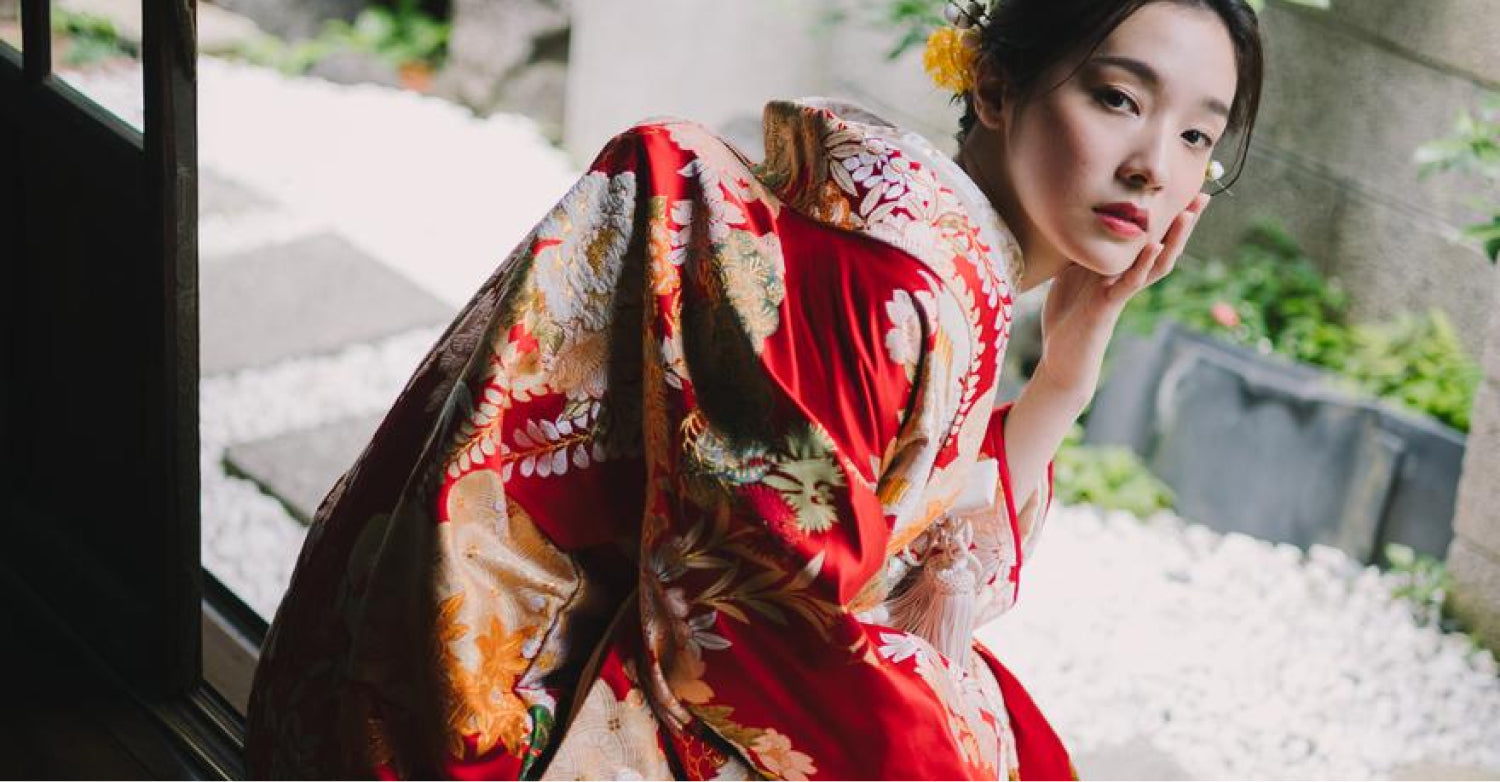
In short: Couples may wear traditional wedding kimono provided through their package, while guests can attend in modest formal Western clothing. Guests should wear socks or stockings, avoid revealing outfits, choose subdued elegant colors, and prioritize clothing and shoes that allow easy movement around the shrine.
Once a date and shrine are settled, the next question most international couples ask is a practical one: what does everyone actually wear? It is a different question from "what is a shiromuku" or "what does montsuki mean," which dictionary-style pages already answer. What couples and their guests really want to know is what to put on, on the day, so that everyone feels comfortable and appropriately dressed inside a shrine setting. This guide answers that question directly, for the couple, for guests, and for family members attending alongside them.
It is also worth noting what this guide does not cover. It focuses on the ceremony itself, held at the shrine, rather than on a separate reception or after-party that some couples add afterward. General Japanese reception etiquette, gift-giving customs, or after-party dress codes are a different topic; if your day includes a reception beyond the ceremony, that is worth planning separately with your coordinator.
Table of Contents
- What do couples wear for a Shinto wedding ceremony?
- What should guests wear to a Shinto wedding?
- What should family members wear?
- What shoes, socks, and seasonal layers work best at a shrine?
- Can couples or guests rent traditional Japanese attire?
- FAQ: Shinto wedding attire
- Who supervised this guide?
What do couples wear for a Shinto wedding ceremony?
Traditional choices include a shiromuku or iro-uchikake for one partner and montsuki haori hakama for the other. WAKON STYLE's package includes one bridal kimono, the groom's formal kimono, accessories, dressing, and bridal hair and makeup.

What are the traditional outfit options?
A shiromuku is a pure white kimono, traditionally associated with purity, while an iro-uchikake is a colored kimono, often worked with elaborate patterns, chosen by brides who prefer more visible color and design. The groom's traditional formal wear is montsuki haori hakama, a set combining a crested kimono jacket with wide, pleated hakama trousers. These are not the only historical variations of Japanese wedding dress, and readers who want to understand the fuller range of styles, their history, and how each is traditionally constructed can find that detail in WAKON STYLE's dedicated attire pages, including options such as wataboshi and tsunokakushi head coverings for the bride. For the purposes of planning your ceremony, what matters is that these two combinations form the standard package offering, not that every couple must choose exactly one fixed look; within the package, there is room to select the option that suits you.

What help is included with dressing?
Getting into a kimono correctly is not something most people, including many Japanese guests, can do without help. WAKON STYLE's Shinto Wedding Package includes the wedding accessories that accompany the kimono, professional dressing, and bridal hair and makeup by experienced Japanese staff. Attire for guests and family is a separate question, addressed later in this guide.

What should guests wear to a Shinto wedding?
Guests can wear formal Western clothing; traditional Japanese attire is not required. WAKON STYLE asks guests to wear socks or stockings, avoid revealing clothing, choose modest and elegant colors, and select an outfit that is comfortable to move in.
This is one of the most reassuring facts for international guests, many of whom assume they will need to source a kimono before traveling. In practice, a formal dress, suit, or similarly polished outfit is appropriate, and the guidance that matters is less about a specific garment and more about tone and practicality. WAKON STYLE's published guest guidance sets out five points worth keeping in mind: wear socks or stockings, avoid revealing clothing, choose subdued and elegant colors, keep the outfit comfortable enough to move in around the shrine grounds, and bring a jacket if the season calls for one. None of this requires a strict dress code by gender; the underlying principle is modest, respectful formality suited to a religious setting, and guests can apply it to whichever style of formal clothing they already own. Guests are also welcome to wear their own country's traditional dress, provided it is not overly revealing.
This kind of practical clarity matters more than it might first appear, because a large share of the couples and guests attending these ceremonies are visiting Japan for the first time. Without a clear point of reference, it is easy to either overdress, assuming a kimono is expected, or underdress, treating the shrine as a casual sightseeing stop rather than a religious venue. The guidance above is designed to remove that guesswork rather than leave guests to infer shrine etiquette on their own.
What should family members wear?
Family members can follow the same modest formal dress code as other guests unless the couple has arranged a specific level of formality. The priority is respectful attire that suits the shrine setting and remains comfortable during the procession and ceremony.
WAKON STYLE's published guidance does not specify a separate dress requirement for parents or close family beyond the general guest guidance, although some families do choose to coordinate a shared level of formality between both sides. If that matters to you, it is worth discussing directly with your coordinator or with the other family in advance, rather than assuming everyone will arrive at the same conclusion independently. For children, older relatives, or anyone who needs extra consideration for mobility, comfort and ease of movement should take priority over strict formality; a shrine ceremony involves walking across grounds and standing for parts of the ritual, and clothing that restricts movement can make that harder than it needs to be. WAKON STYLE has not published a fixed rule requiring specific family attire such as formal montsuki or tomesode kimono, so families who want that option should raise it as a specific request rather than assume it is standard.
This question comes up especially often for couples whose two families are meeting for the first time, sometimes across very different cultural expectations of what "formal" looks like at a wedding. Rather than trying to guess what the other side will wear, a short conversation beforehand, whether directly or through your coordinator, tends to resolve most of the uncertainty and helps both families arrive feeling equally prepared.
What shoes, socks, and seasonal layers work best at a shrine?
Wear socks or stockings and choose footwear that is formal enough for the occasion but stable for walking across shrine grounds. Bring a suitable jacket or layer when the season requires it, because parts of the day may involve outdoor movement.
Why are socks or stockings required?
This is a specific, published requirement in WAKON STYLE's guest guidance, and it applies regardless of whether guests choose Western or Japanese-style clothing. Rather than reading it as an arbitrary rule, it is best understood as part of the general expectation of modest, respectful dress appropriate for visiting a shrine, alongside the guidance on avoiding revealing clothing and bright colors.
How should you plan for movement and weather?
Shrine ceremonies typically involve some walking, including the procession itself, so footwear that is elegant but genuinely wearable on uneven or outdoor ground will serve you better than an impractical heel chosen purely for photographs. Ceremonies are generally held rain or shine, with adjustments made in consultation with the shrine only in cases of severe weather, so it is sensible to bring a jacket or layer suited to the season rather than assume the day will be entirely indoors. Specific arrangements such as umbrellas, footwear changes, or a cloakroom for coats are not confirmed as standard services, so if these matter to you, they are worth asking about directly rather than assuming they will be provided.
Can couples or guests rent traditional Japanese attire?
The couple's traditional wedding attire is included in WAKON STYLE's Shinto Wedding Package. Guest or family kimono rental is not confirmed as a standard inclusion, so availability should be discussed before the ceremony rather than assumed.
For the couple, this part is straightforward: the bridal kimono and the groom's montsuki haori hakama are already part of the package price described in WAKON STYLE's cost breakdown. For guests or family members who would like to wear a kimono rather than Western formal dress, this is not something the current package confirms as a standard offering. Rather than assuming it is available, or assuming it is not, the more useful approach is to raise it directly when you are planning: ask what is possible for your specific ceremony, who it would be arranged for, what sizing and dressing support would look like, and how it fits around the day's schedule. Treating this as a question to confirm, rather than a service to expect, will save any last-minute disappointment.
If this is something you or your family are hoping for, ask early so your coordinator has the most room to check what can realistically be arranged, including sizing and availability, before your date.
FAQ: Shinto wedding attire
Guests do not need to wear a kimono, but they should follow the shrine's modest dress guidance and confirm any rental needs in advance. The following answers cover the most common practical details.
Do guests have to wear a kimono? No. Modest formal Western clothing is appropriate, and traditional Japanese attire is not required.
Are socks or stockings required at the shrine? Yes. WAKON STYLE's guest guidance requires socks or stockings as part of attire suitable for visiting a shrine.
Can guests wear bright or revealing clothing? Guests are asked to avoid revealing clothing and choose subdued, elegant colors that respect the solemn shrine setting.
Should guests bring a jacket? Depending on the season, bringing a jacket or suitable outer layer is recommended.
Is traditional attire rental available for guests and family? Guest and family rental is not confirmed as a standard package inclusion, so ask about availability in advance.

Who supervised this guide?
Supervised by Etsuko Inoue, WAKON Wedding Producer
View Etsuko Inoue's full profileEtsuko Inoue has guided international couples through wedding planning in Japan since 2017, including attire arrangements like these. Her profile shares more about her background.
If you need to confirm attire arrangements for the couple or ask whether guest kimono rental can be arranged, contact WAKON STYLE before your ceremony date.
Contact Us

