

What Happens After a Shinto Wedding Ceremony? Meals, Photos, and the Rest of the Day
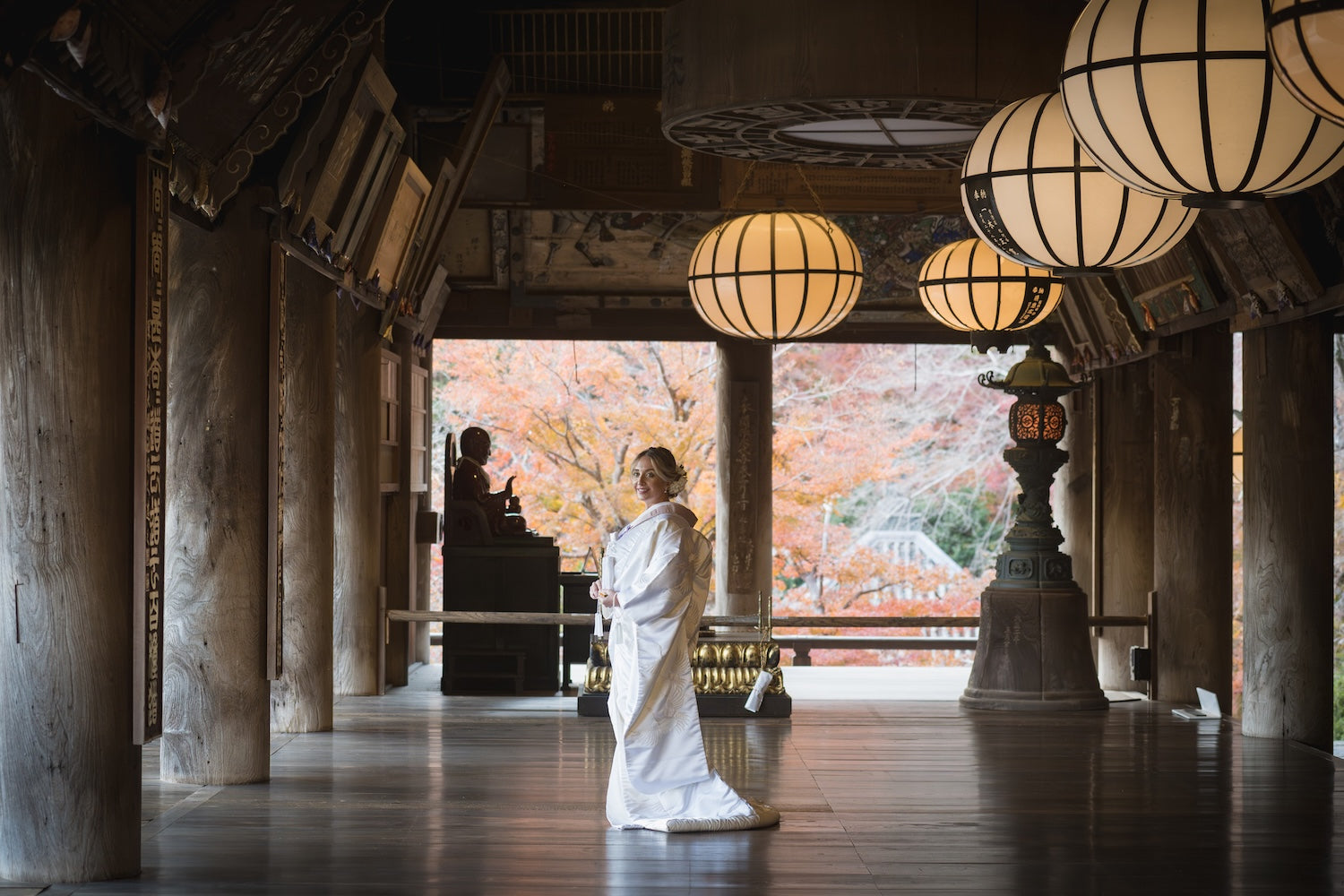
In short: A reception is not part of the ceremony itself. If you want a meal with your guests afterward, WAKON STYLE can introduce you to Japanese or Western-style restaurants and banquet halls near the shrine, arranged separately from the ceremony. The rest of the day can also include a photo session at another location, a small memento such as an omamori charm from the shrine, and photos that arrive by download link about a month later. None of this is included automatically — each piece is something you choose and arrange in advance.
If you have already read that a Shinto ceremony lasts about thirty minutes, the next question follows naturally: thirty minutes, and then what? In a Western wedding, the ceremony and the reception are usually the same event in two parts, often at the same venue, on the same afternoon. A Shinto wedding does not work that way, and almost nothing on the subject explains why until you are already partway through planning one.
This guide covers what actually happens once the ceremony itself is over: whether there is a reception, where people eat if there is one, what else you can add to the day, and when your photos and any keepsakes actually reach you. It does not cover the ceremony's internal structure or the hour-by-hour schedule leading up to it, which are covered in our companion guides linked below.
Table of Contents
- Is there a reception after a Shinto wedding?
- Where do people eat afterwards?
- Can you take photos at other locations?
- What do you take home from the shrine?
- When do you receive the photos and video?
- How does the rest of the day usually go?
- Who supervised this guide?
Is there a reception after a Shinto wedding?
Not as part of the ceremony, no. Whether anything can be held on the grounds themselves depends on the individual shrine and is worth asking about directly rather than assuming. In practice, a meal or reception with your guests happens somewhere else, arranged separately from the ceremony. Depending on where your ceremony is held, WAKON STYLE can introduce you to Japanese and Western-style restaurants and banquet halls nearby, but that introduction is a distinct step, not a continuation of the ceremony itself.
This is the detail that trips up couples who are used to a Western wedding, where the ceremony and the reception are usually treated as one event with two parts. A Shinto ceremony is complete in itself: the vows, the exchange of sake cups, the offering to the gods, all take place within the shrine grounds and conclude there. What happens afterward, whether that is a formal meal, a casual lunch, or nothing more than photographs and a quiet afternoon, is a separate decision that you make on your own terms.
Where do people eat afterwards?
Through an introduction rather than a full production. WAKON STYLE's role here is to introduce you to restaurants and banquet halls near your ceremony location, drawing on both Japanese and Western-style options depending on what is available in that area. It is not a full reception-planning service in the way a Western wedding planner might run an entire evening program with a seating chart, speeches, and a formal menu tasting in advance.
Because the options depend on where the shrine is, the choice of restaurant or hall is tied to the choice of shrine itself, which is one more reason the ceremony location deserves attention early in the planning process rather than being an afterthought. If bringing family or a larger group of guests is part of your plans, our guide to bringing family and guests to a Shinto wedding covers what changes once more people are involved.
Sorting out a reception is not something you need to resolve on day one. It sits inside the "Finalizing Optional Services" stage of the booking process, alongside decisions about photography, videography, hair and makeup, and other extras, all confirmed once you already have a contract and a shrine in place.
Can you take photos at other locations?
Yes. A photo session at a traditional Japanese landscape or a well-known tourist spot after the ceremony is something WAKON STYLE supports, including selecting the location and arranging the logistics. Couples who want photographs beyond the shrine grounds, at a garden, a historic street, or a scenic backdrop elsewhere, can build that into the day.

One condition matters here and it is not negotiable: because of strict shrine rules, photography must be handled by WAKON STYLE's own experienced photographers rather than a photographer you bring with you. This applies to the ceremony itself and extends to any organized session that follows it. If a couple already has a photographer they would rather work with, that does not change who shoots the official session, and what else that person may or may not do on the day is a question for the specific shrine rather than something WAKON STYLE can answer.
The current brochure describes a ceremony-and-photo plan rather than a photo-only package. Photography takes place around the shrine or temple precincts or during the ceremony; off-site photography after the ceremony is a separate arrangement. Ask WAKON STYLE for current pricing and availability.
What do you take home from the shrine?
Often a small memento. Many shrines provide souvenirs such as omamori, the protective charms sold and given at Shinto shrines, as a keepsake from the ceremony. What exactly is offered is not standard across every shrine; it depends on that shrine's own practice, so it is worth checking what is available once your venue is chosen rather than assuming a particular item in advance.

This is a small detail compared to photography or a meal, but it is worth asking about, because a Shinto ceremony does not come with the printed programs and venue decorations that a Western wedding often leaves behind. What is available differs by shrine, and some shrines do not offer keepsakes at all.
When do you receive the photos and video?
Not on the day itself. Photographs are sent roughly one month after the ceremony, delivered by email as a download link rather than handed over at the shrine. That gap surprises some couples who expect at least a preview before leaving Japan, so it is worth building into your expectations rather than treating it as a delay.

Ordering a printed album afterward is possible, but two conditions are worth knowing before you commit to one. Damage that occurs during international shipping is not covered, and overseas delivery carries its own separate shipping charge on top of the album itself. If a physical album matters to you, factor in that it is shipped internationally with the same risks as any other package sent abroad, and price the shipping separately rather than assuming it is bundled in.
Video is a separate option again, not part of the standard package. A professional videographer can film and edit the ceremony, and a digital delivery plan is available for the finished result. As with photography, costs for these options are not covered here.
How does the rest of the day usually go?
It depends what you have arranged, but the sample schedule on WAKON STYLE's Important Information Before Booking page gives a starting point: the ceremony day, as laid out there, concludes around 13:10, though times vary based on the shrine and booking status. What happens after that conclusion time is where this guide picks up; the hour-by-hour build-up to it, including preparation and the ceremony itself, is covered in our guide to how many days you need in Japan for a Shinto wedding.
For most couples, the early afternoon is genuinely open. Some head straight to a meal with the guests who travelled with them. Some move on to a photo session at another location while everyone is still dressed for the day. Some simply return to the hotel and let the morning settle before doing anything else.
Some couples want to mark the moment inside the shrine grounds themselves, in the minutes right after the ceremony rather than later at a separate venue. That is not a standard part of the plan. Shrines generally ask that couples refrain from anything that might disrupt the solemn atmosphere of the grounds, though depending on the nature of the request, negotiation with the individual shrine is sometimes possible. What one shrine permits will not necessarily be allowed at another, since the grounds are the shrine's own and the decision sits with them rather than with WAKON STYLE. If something personal along those lines matters to you, it needs to be raised early, as a specific request to discuss with your shrine, rather than assumed as part of the arrangement.
For the ceremony itself and what a full booking includes, the Shinto wedding overview is the place to start, and the FAQ answers a number of smaller questions that come up once the ceremony day is behind you.

Who supervised this guide?
Supervised by Etsuko Inoue, WAKON Wedding Producer
View Etsuko Inoue's full profileEtsuko Inoue has produced international Shinto weddings since 2017. Her profile shares more about her background and how she works with couples planning a wedding in Japan.
If you are trying to picture what your own afternoon would look like after the ceremony, contact WAKON STYLE with your shrine or area of interest, and we can talk through the meal, photography, and other options that would apply to your day.
Contact Us

