真实婚礼故事
01



Shinto weddings are traditional Japanese ceremonies uniting couples before the gods. Symbolizing purification and family union, they originated in the 8th century but gained popularity after the 1900 imperial wedding. Today, they blend ancient rituals with modern celebrations, immersing couples in Japan's rich cultural heritage.


At shrines, couples make vows to Shinto gods, honoring nature and ancestral deities. In temples, vows are based on Buddhist teachings, made to Buddha and ancestors. Both offer sacred, solemn atmospheres and can be chosen based on the couple's beliefs or family traditions. Either choice provides a blessed start to the couple's new life together.
A Shinto wedding ceremony typically follows these steps.


Sanshin:
Sanshin marks the couple's entry into sacred space. Their quiet walk shows respect for gods and marriage, symbolizing their shared commitment. This ritual purifies them for their vows.


Shubatsu:
The priest purifies the couple using a sacred cedar branch, removing worldly impurities. This ritual prepares them to enter the sacred marriage ceremony in a pure state.


Norito-sojo:
The priest conveys the couple's marriage intention to the gods. This crucial moment seeks divine approval and blessings, emphasizing the sanctity of marriage.


San-san-kudo:
Couple shares three cups of sake, three sips each. Cups symbolize past, present, future; sips honor gods, family, guests. Signifies marital bond and lifelong commitment.


Seishi-sodomoku:
The couple pledges love and loyalty. This oath before gods and guests symbolizes the public and sacred promise of marriage.


Ring Exchange:
Couples exchange rings as symbols of eternal love. Though a relatively new, Western-influenced element, it's now common in many Shinto and Buddhist weddings.


Tamagushi-hoten:
The couple offers gratitude and prayers to the gods. This act expresses respect, thankfulness, and wishes for future blessings.


Shinzoku-hai:
The families of the bride and groom share cups. This ritual blesses the union of two families and strengthens new familial bonds.
Each of these sacred rituals blends ancient traditions with modern elements, creating a unique and meaningful experience for couples beginning their new life together.
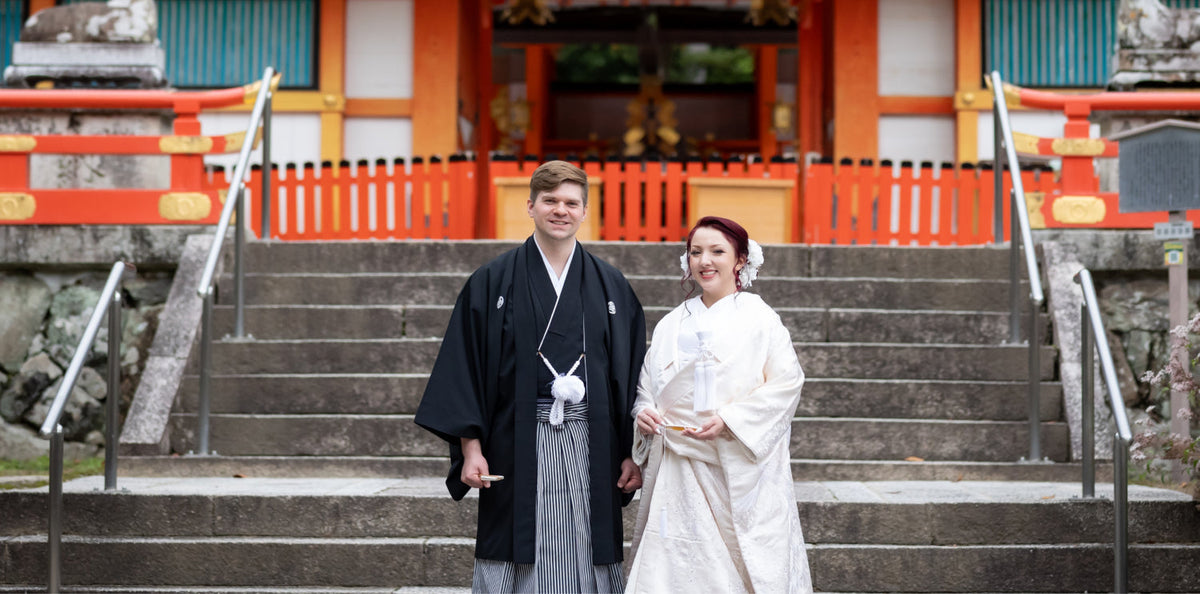
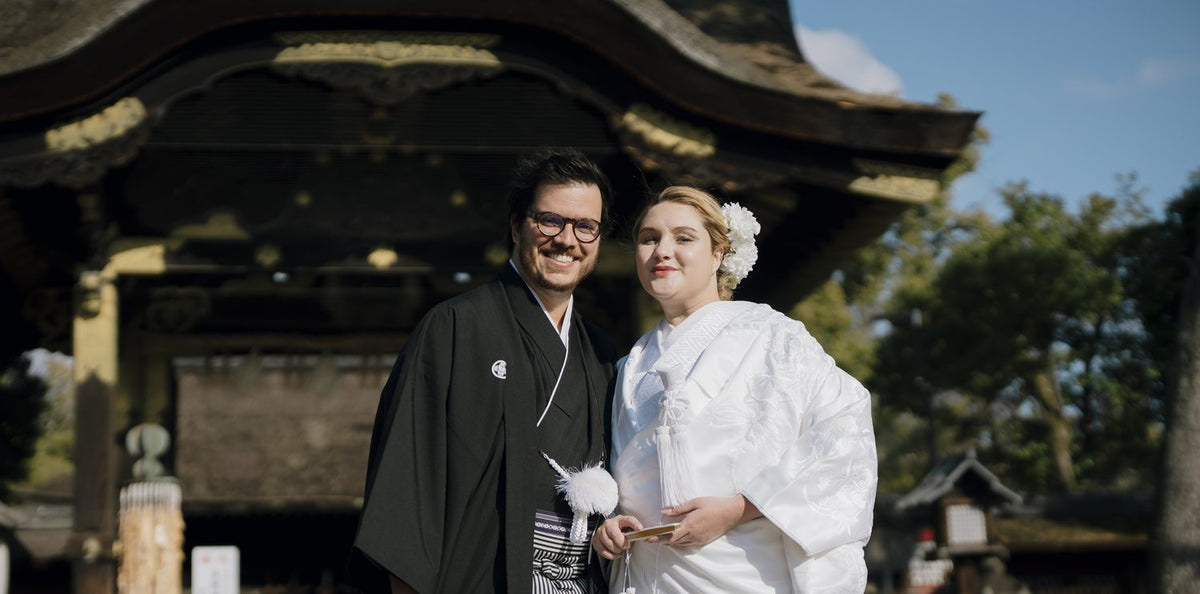
Shinto wedding attire is rich in symbolism and elegance. The bride typically wears "shiromuku," a pure white kimono symbolizing purity and maidenhood.


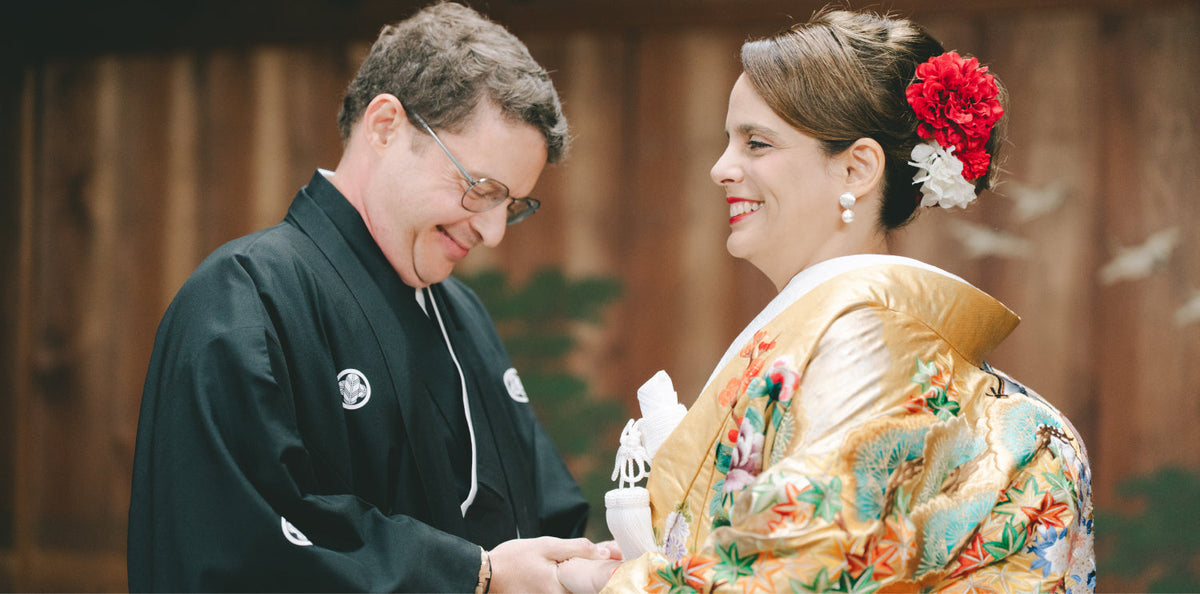
For those desiring more vibrant attire, a Shinto ceremony in colorful "iro-uchikake" is also possible. This kimono symbolizes prosperity and joy.


The groom typically wears a formal black montsuki kimono with striped hakama trousers, expressing respect for tradition and dignity.


Shrines (jinja) are sacred spaces for traditional Japanese weddings. The main sanctuary (honden) hosts key rituals, while guests observe from the worship hall (haiden). Beautiful gardens and red torii gates often provide a stunning backdrop.


We specialize in traditional Japanese Shinto weddings for international couples.
我们提供的服务包括:
Our English-speaking staff will support you throughout the process.

从咨询到婚礼当天,我们会通过多语言邮件支持引导您完成所有准备工作,让您安心迎接仪式。
真实新人,真实体验
了解更多在日本举行的真实神前婚礼与佛前婚礼故事。